


THE ESSENTIAL SECRET IN SHAPING CHILDREN’S CHARACTER
In many discussions about parenting, parents often look for the best method, the most effective discipline strategy, or the fastest way to shape a child’s character. Yet the most decisive “secret” is actually hidden in something simple and repeated every day. A child’s character is not formed in a single event, but by the small, ongoing rhythms that take place at home. Behind that process are two things that most strongly shape a child’s character— and that also drain a parent’s heart the most: consistency and patience.
Consistency gives children a sense of security and direction, while patience gives them room to grow without fearing failure. The results may not always be visible quickly, but that is precisely where character is formed—slowly and deeply.
These two things may look simple, but their impact is profound and long-term. Children are not shaped by big moments or long advice, but by patterns repeated every day. God’s Word affirms the importance of perseverance in the process.
“Let us not become weary in doing good, for at the proper time we will reap a harvest
if we do not give up.”
(Galatian 6:9 NIV)
Parenting is a long journey whose results often aren’t immediately visible. Without consistency and patience, parents easily grow weary and give up before they see the fruit.
Consistency is important because children learn about the world and about God through repetition. Deuteronomy 6:6–7 describes God’s Word being taught again and again in everyday life—when sitting at home, when traveling, when getting up, and before going to bed. Faith and character are formed through small routines that are practiced continually.
In God’s Word, God’s own character is described as faithful and unchanging. When parents strive to be consistent, children are learning to recognize a picture of God’s faithfulness through everyday relationships at home. Psychologically, this is called emotional reliability— when a child knows their parents will respond in a relatively stable way. Children need predictable responses from their parents. When parents are consistent in love, boundaries, and presence, children feel safe. This sense of safety becomes a foundation for emotional development and self-confidence.
Consistency in parenting is often misunderstood as rigid rules that never change. But healthy consistency does not mean being harsh; it means being trustworthy. Consistency doesn’t mean always being right—it means being dependable. Children don’t need perfect parents, but parents who show up with stable patterns. Small consistencies—like a nightly prayer routine, a consistent way of correcting, or a steady presence—can build a deep sense of security in a child.
Proverbs 22:6 reminds us that raising and training children is a long process. It begins in a child’s early years, and its results may be seen when they are grown, even into old age. The whole process requires consistency and faithfulness.
Patience complements consistency. Without patience, consistency can turn into pressure. Without consistency, patience can become permissiveness. The Bible places patience as part of true love. First Corinthians 13:4 says that love is patient. Patience is the ability to keep loving through a slow process.
Many parents think patience means suppressing emotions or always giving in. But biblical patience is not passive—it is a strength that restrains itself for a greater purpose. Patience is an expression of mature love.
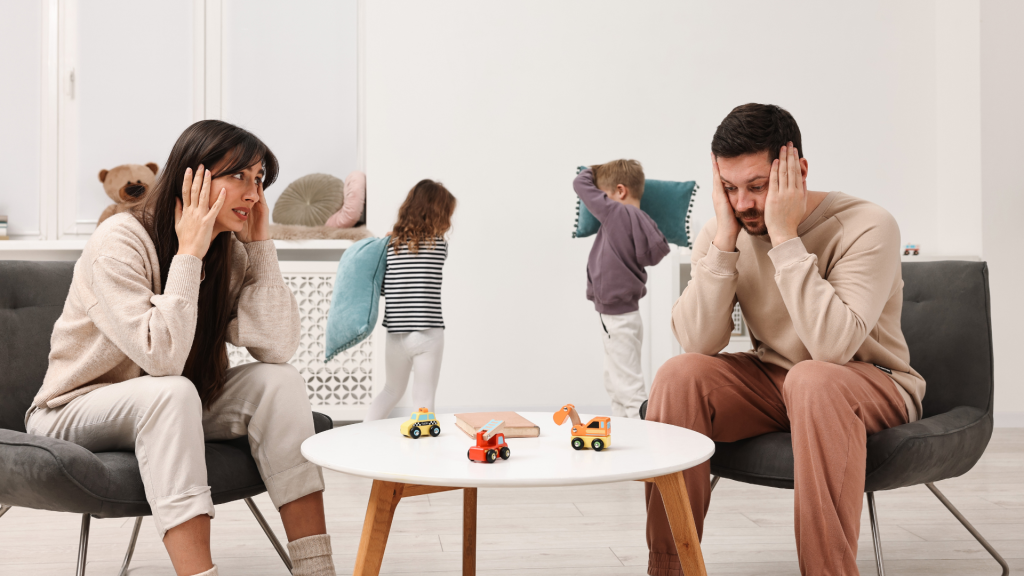
From a psychological perspective, parental patience helps children learn to regulate their emotions. Children do not yet have mature emotional-regulation skills, so they “borrow” calm from their parents. When parents calm themselves before responding, children learn that emotions can be managed, not simply unleashed.
This doesn’t mean parents never get angry, but they learn to respond rather than react. Patience often begins with a brief pause: taking a breath, calming down, and then speaking. That small pause may seem simple, but it powerfully shapes the atmosphere of the whole home.
God Himself is patient in shaping His people. Psalm 103:13 describes the Lord as a father who has compassion on his children. A parent’s patience reflects the Father’s heart—one that understands human limitations.
“As a father has compassion on his children,
so the LORD has compassion on those who fear him;”
The greatest challenge in maintaining consistency and patience is often not a lack of knowledge, but exhaustion. Many parents carry multiple roles at once: working, serving, leading, managing the home, and walking alongside their children. When the body is tired and the heart is under pressure, responses become reactive.
That is why God’s Word reminds us to guard our hearts. Proverbs 4:23 says that from the heart flow the issues of life. Guarding the heart can also be done by caring for ourselves physically, emotionally, and spiritually. Self-care is not an act of selfishness, but part of our responsibility, so that parents can show up fully present.
Physically, your body’s condition greatly affects your patience. Lack of sleep and fatigue make emotions easy to explode. Physical self-care can begin with simple things like getting enough sleep, eating regularly, and exercising consistently. In today’s world, physical self-care can also mean managing gadget usage and giving the body time to rest without distractions. First Corinthians 6:19 reminds us that our bodies are temples of the Holy Spirit. Caring for the body is part of obedience.
Emotionally, parents need space to process their feelings. Unprocessed emotions will accumulate and manifest as anger or deep exhaustion. Psalm 62:9 invites us to pour out our hearts to God.
“Do you not know that your bodies are temples of the Holy Spirit, who is in you,
whom you have received from God? You are not your own;”
Emotional self-care can include an honest conversation with a spouse or a spiritual friend, writing a brief journal, or taking a short pause when emotions begin to rise. Limiting exposure to social media that triggers comparison also helps maintain emotional stability. Learning to be grateful for your own process helps parents remain patient.

Spiritually, consistency and patience grow out of a relationship with God. John 15:5 emphasizes that apart from Him, we can do nothing. Devotional time doesn’t have to be long, but it does need to be regular. A short morning prayer, praying for your child by name, or reading one verse and reflecting on it throughout the day can keep the heart tender. Lamentations 3:22–23 reminds us that God’s steadfast love is new every morning. Each day is a new chance to start again—even after a difficult day.
For church leaders, consistency and patience in the family are part of their calling to ministry. First Timothy 3:4–5 highlights the importance of leading one’s household well. This is not a distraction from ministry, but a foundation that strengthens ministry. A healthy church makes room for families to grow and be restored. When parents faithfully maintain healthy rhythms at home, they are laying the right foundation for the next generation.
“He must manage his own family well and see that his children obey him, and he must do so in a manner worthy of full respect. (If anyone does not know how to manage his own family, how canhe take care of God’s church?)”
In the end, consistency and patience are not merely human abilities, but the fruit of the Holy Spirit. Galatians 5:22-23 mentions patience as a fruit of the Spirit. Every time a parent chooses to remain present, repeat the teaching, withhold a reaction, and return with love, the Holy Spirit is at work.
Children may not change immediately, but they absorb stability, love, and consistent presence. In a long process that often feels ordinary, God is shaping both the child’s heart and the parent’s heart at the same time. Parenting is not about being perfect, but about being faithful in small things and trusting that God is working through that faithfulness each day. Through small things repeated every day, a child’s character is formed to be strong and whole. God bless you.
Source: Luciana Crhistina (IFGF Kids Global Team)

