

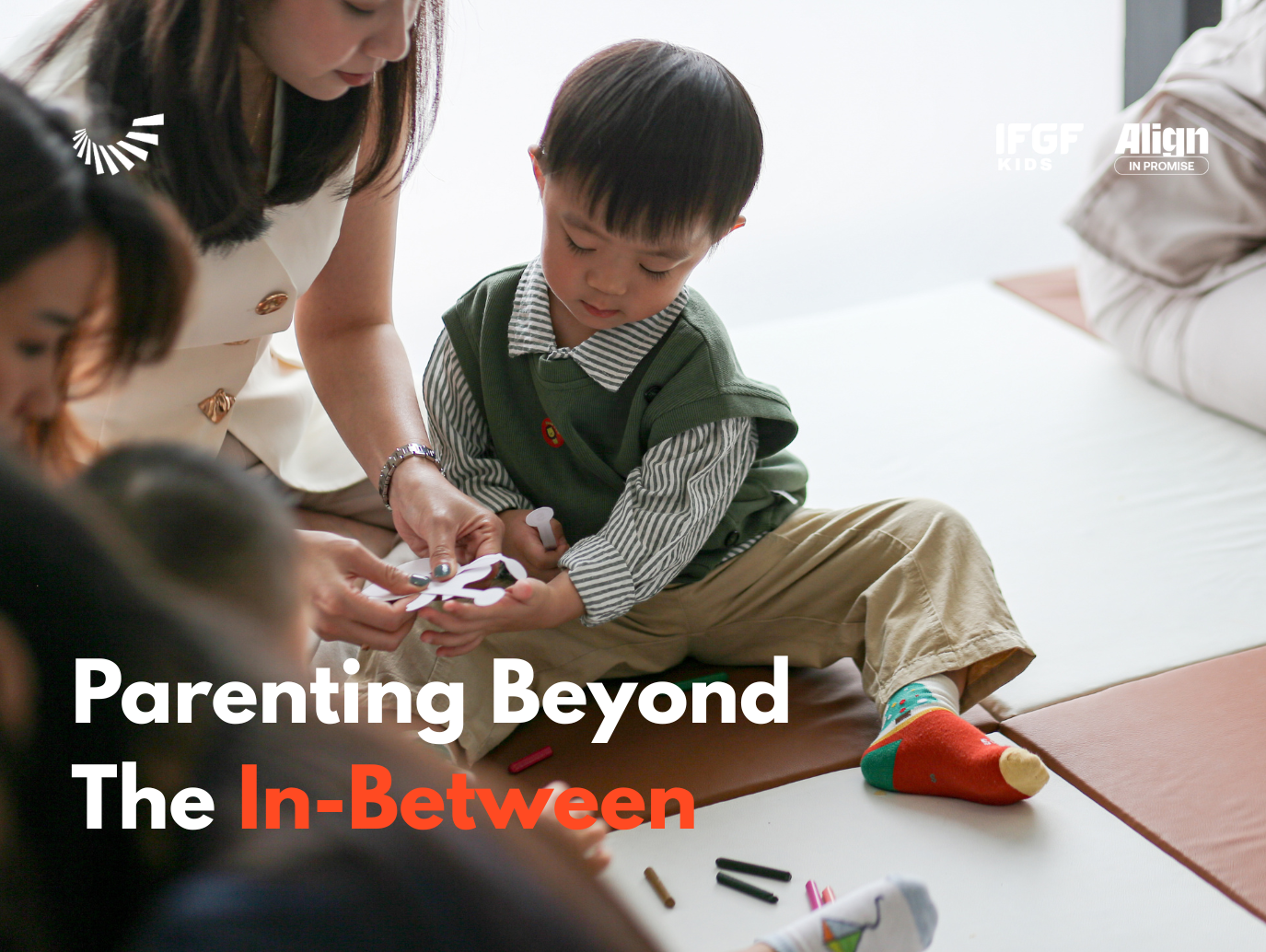
Parenting Beyond The In-Between
Not every family is going through the best of times right now. Perhaps today some parents are still waiting for a promotion that has not come. Some have just lost their jobs and don’t yet know how they will make ends meet next month. Some couples are trying to restore their relationship after a long season of conflict. Some families are caring for aging parents who are ill. Some are waiting for the gift of a child. Others pray every night for God to make a way through financial pressure that seems to grow heavier each day.
Amidst it all, life goes on. Children still wake up early. They still go to school. They still ask us to play with them, listen to bedtime stories, or ask about simple things that sometimes make us smile. They don’t stop growing just because their parents are going through a difficult time.

In fact, it is precisely during times like these that they are learning some of life’s most important lessons—not only from what we say, but from what they see every day. This is what we call the In-Between.It is the season when we have not yet seen the answer to our prayers, but we have not given up hope. It is the season when God has not yet opened a new door, while the old one has already closed. It is the season when circumstances have not changed, yet we choose to continue believing that God is at work.
Ironically, much of life is spent in seasons like these. As parents, we often hope they will pass quickly. We want our financial problems to be resolved soon. We want family relationships to be restored immediately. We want work to become stable again. We want our children to grow up quickly and understand the situation. We want everything to be okay.
Yet the Bible reveals a different pattern. God rarely works instantly. He is far more interested in shaping people than merely changing circumstances. Consider Joseph. God gave him a great dream, but before the palace came the pit, slavery, false accusations, and prison. David was anointed king while he was still young, but many years passed before he actually led Israel. Even Jesus Himself spent around thirty years living an ordinary life before beginning His ministry. Yet God never wasted the season of waiting.
The same is true in families. We often think that God is shaping our children, while at the same time, He is also shaping us as parents. When finances are difficult, children observe whether their parents remain thankful or live in constant panic. When there is tension between husband and wife, children notice whether their parents choose to forgive or blame one another. When employment feels uncertain, children watch whether their parents continue to pray and trust in God’s provision, or whether they lose hope.
Without realizing it, the In-Between season often becomes the greatest classroom for our children’s faith. Interestingly, when Moses delivered his message in Deuteronomy 6, the Israelites were also in an In-Between season. They had been delivered from Egypt, but they had not yet entered the Promised Land. Moses knew that their greatest challenge was not how to conquer Canaan, but how to continue loving God when life changed and the time they had hoped for had not yet come. Therefore, before speaking about how to raise children, God first spoke about the hearts of parents.
“Love the LORD your God with all your heart and with all your soul and with all your strength.”(Deuteronomy 6:5 NIV)
Only after that did God say:
“Impress them on your children. Talk about them when you sit at home and when you walk along the road, when you lie down and when you get up.”
(Deuteronomy 6:7 NIV)
The order is very important. In the midst of a season of transition, God did not give parents a complicated parenting strategy. He first asked them to live a life of loving Him, and then to bring that love into everyday conversations with their children.
Children do not just learn from family devotions or memorised verses. They learn from their parents’ real lives. They see how their parents continue to love God when times are tough, keep praying when the future is uncertain, and remain faithful even when God’s answer has not yet come.
Often, the faith that leaves the deepest impression is not the faith taught when everything is going well, but the faith demonstrated when a family is walking through an In-Between season.
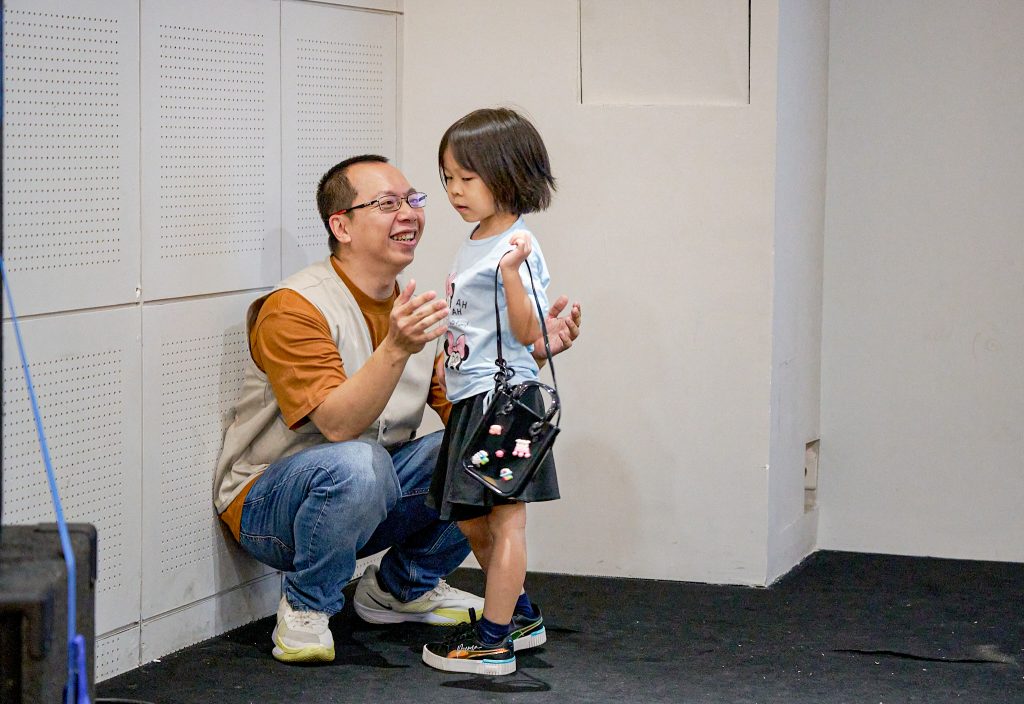
In the midst of an increasingly fast-paced culture, one value that needs to be restored in families is the ability to wait. We live in an age of instant gratification. Food can arrive within minutes. Movies can be played at any time. An item we want can be delivered the next day. Children are growing up in a world that constantly says, “If you want it, get it now.”
Without realizing it, this mindset also enters our homes. When children ask for something, we often feel that we must answer immediately. Perhaps we do not want to see them disappointed. Perhaps we feel guilty because we have been too busy working. Or perhaps it is simply easier to say “yes” than to deal with prolonged complaining. Yet not every desire needs to be fulfilled immediately. This is precisely where parents have a valuable opportunity to shape a child’s heart.
Imagine a child saying, “Dad, I want a new LEGO set,” or, “Mom, I want these shoes.” Our response does not always have to be “yes” or “no.” There is a third response that can often be far more constructive: “I’m glad you told me. Let’s wait for two weeks. During those two weeks, we can pray about it, think about it together, and then discuss it again.” It may seem simple.
Yet within that pause, something far more valuable is taking place. The child learns that not every desire must be fulfilled immediately. They learn to distinguish between needs and wants. They learn that wise decisions are not made based on momentary impulses. They learn that waiting is not a punishment, but part of the process of becoming mature.
Often, after several days, the child may already have forgotten the item that once seemed so important. However, if after the waiting period they still want it, and it is indeed a wise decision, the parents can consider giving it to them. Through this simple process, the child is learning an important value: delayed gratification the ability to postpone satisfaction for the sake of something better.
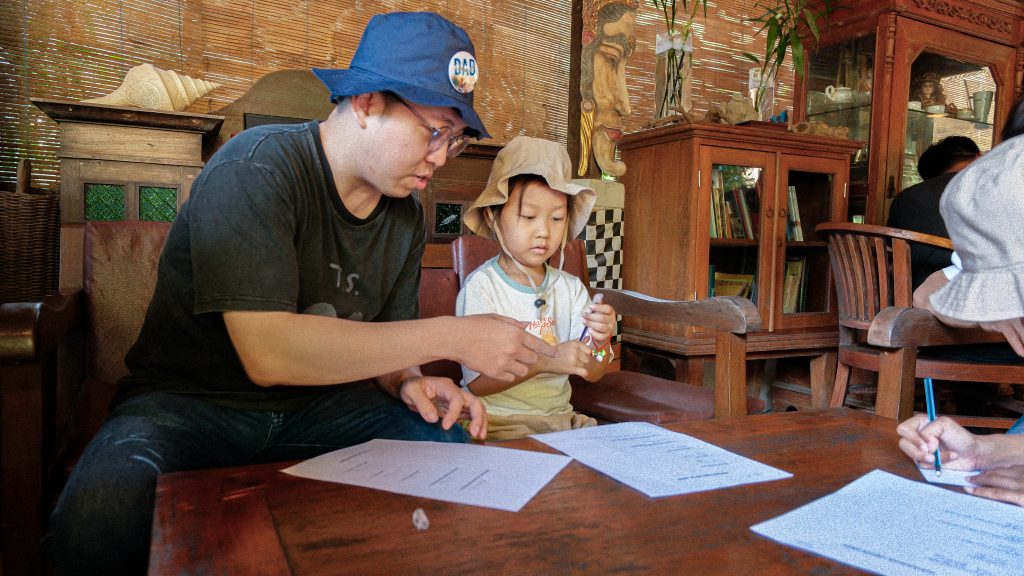
Interestingly, this principle is not only supported by many studies on child development, but is also aligned with the truth of God’s Word. The Bible describes self-control as one of the fruits of the Spirit in Galatians 5:22–23. Self-control is not the ability to say “no” to every desire. It is the ability not to be controlled by our desires.
Is this not also how God teaches us? How many of our prayers have not been answered immediately? How many doors have not yet been opened? How many dreams is God still asking us to wait for? Perhaps we think we are simply teaching our children to wait for a toy. Yet what we are building is far greater than that. We are shaping hearts that are not enslaved by temporary desires. We are planting patience, self-control, and trust in God.
The true purpose of Christian parenting is not to raise children who are always happy because they receive everything they want. Our purpose is to raise disciples of Christ.
Children who know God.
Children who can wait.
Children who believe that God is always good, even when His answer has not yet come.
Children who understand that character is more valuable than comfort.
None of this is formed overnight. That is why the In-Between season is a gift. It is where faith is practiced, and patience is formed. It is where parents learn to surrender control to God. And it is where children see that following Jesus does not mean always receiving what we want, but learning to trust Him in every season of life.
In the end, children may forget many of the things we once gave them. But they will not forget what it felt like to be raised in a home filled with faith a home that continued to pray when answers had not yet come, remained thankful when circumstances were difficult, and continued believing that God was at work.
That is the essence of Parenting Beyond The In-Between. It is not about bringing children to God’s answer as quickly as possible, but about guiding them to discover God in the midst of the season. Because the greatest legacy we can leave is not a life without an In-Between, but a faith that remains steadfast within it.
Source: Luciana Crhistina (IFGF Kids Global Team)

